Mouth Ulcer Without Pain: Could It Still Be Oral Cancer?
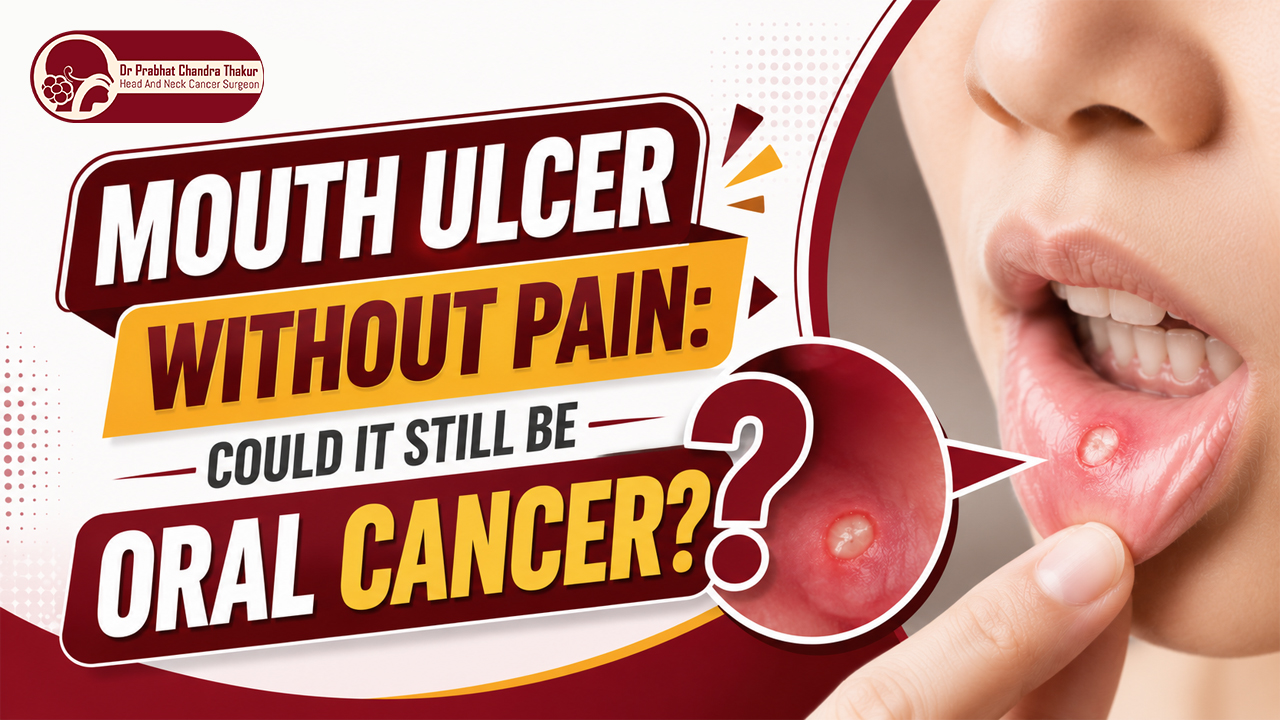
Yes. A mouth ulcer without pain can still require medical evaluation, and in some cases a persistent painless ulcer may be an early sign of oral cancer. Most mouth ulcers are harmless and heal within one or two weeks, but pain is not a reliable way to decide whether a lesion is serious. An ulcer should be examined when it does not improve, remains present for around three weeks, repeatedly appears in the same place, or occurs with a red or white patch, bleeding, numbness, a lump, difficulty swallowing, or a neck swelling. These symptoms do not automatically mean cancer, but they should not be ignored. This guide explains how common ulcers differ from concerning lesions, what warning signs to watch for, and when to consult a dentist, ENT specialist, or head-and-neck specialist. Can a Painless Mouth Ulcer Be Cancer? A painless mouth ulcer can be associated with oral cancer, although most painless ulcers are caused by non-cancerous conditions. Some head-and-neck cancers produce little or no pain in their early stages. Therefore, the absence of pain should not be treated as proof that a lesion is harmless. The more useful questions are: A professional examination is the only reliable way to determine whether a persistent lesion is caused by irritation, infection, inflammation, a precancerous change, or cancer. What Is a Mouth Ulcer? A mouth ulcer is a break or sore in the moist tissue lining the oral cavity. It may develop on the: The oral cavity includes the lips, gums, front two-thirds of the tongue, inner cheek lining, floor of the mouth, hard palate, and the small area behind the wisdom teeth. Most oral cavity cancers begin in squamous cells, the flat cells that line these surfaces. A typical canker sore is usually round or oval, white or yellow in the centre, and surrounded by a red border. It commonly causes burning, tenderness, or pain. A lesion that is painless, persistent, unusually shaped, or different from previous ulcers deserves closer attention. Why Might a Mouth or Tongue Ulcer Not Hurt? Pain depends on the ulcer’s cause, depth, location, surrounding inflammation, and effect on nearby nerves. A small traumatic ulcer may produce little discomfort. Similarly, an abnormal lesion may initially change the surface tissue without causing noticeable pain. The National Cancer Institute notes that lip and oral cavity cancer may sometimes cause no symptoms and may be discovered during a routine dental examination. Government cancer-training guidance also describes some head-and-neck tumours as “silent,” meaning pain or other obvious symptoms may not appear early. This is why healing time and visible changes are more useful warning signals than pain alone. Harmless Mouth Ulcer or Concerning Lesion? No visual checklist can diagnose cancer, but the following comparison can help a reader decide when an examination is appropriate. Feature Common minor or traumatic ulcer Potentially concerning lesion Pain Often sore, burning, or tender May be painful or painless Appearance Commonly round or oval with a pale centre and red border May appear as a persistent ulcer, red patch, white patch, lump, or thickened area Cause Cheek bite, sharp tooth, braces, denture friction, burn, or irritation May have no clear cause Healing Usually improves within one or two weeks Does not improve or remains for about three weeks Bleeding Usually only after irritation May bleed without an obvious injury Other symptoms Usually isolated May occur with numbness, swallowing difficulty, speech change, loose teeth, neck lump, or unexplained weight loss Next step Remove irritation and monitor healing Arrange a dental, ENT, or head-and-neck examination Most minor ulcers heal naturally, while a long-lasting ulcer should be professionally checked. The NHS advises evaluation when an ulcer lasts longer than three weeks, differs from previous ulcers, becomes increasingly red or painful, or bleeds. What Causes a Non-Painful Mouth Ulcer? Dental or mechanical irritation A sharp tooth, rough filling, poorly fitting denture, braces, accidental cheek bite, or hard food can repeatedly injure the same area. An ulcer caused by friction should begin improving after the source of irritation is corrected. A dentist may need to smooth a sharp tooth, repair a filling, or adjust a denture. Continuing to treat the sore without removing the irritant may delay healing. Cuts or burns Hot drinks, hard foods, toothbrush injuries, and accidental bites can damage the mouth lining. Some minor injuries cause surprisingly little pain, especially after the initial irritation settles. Recurrent inflammatory ulcers Canker sores are common, but they are generally painful and tend to heal within one or two weeks. Recurrent or unusually large ulcers may require assessment for nutritional, inflammatory, immune-related, or medication-related causes. Precancerous changes Some abnormal areas appear as persistent red or white patches rather than a typical crater-like ulcer. Oral dysplasia means that cells look abnormal under a microscope. It is not cancer, but some forms may later progress to cancer. Oral cancer Oral cancer may begin as a sore that does not heal, a lump, a thickened area, or a persistent red or white patch. It can affect the tongue, gums, inner cheeks, floor of the mouth, palate, or lips. These changes may be painful, but pain is not always present. Readers can also review the website’s detailed guide to the symptoms of tongue cancer. What Warning Signs Should Not Be Ignored? Arrange an examination when a mouth or tongue lesion has one or more of the following features: These symptoms can also result from non-cancerous conditions. Their presence means that an examination is appropriate—not that cancer has already been diagnosed. For a broader overview, see these oral cancer warning signs. Who Has a Higher Risk of Oral Cancer? Oral cancer can occur without an obvious risk factor, but the likelihood is higher among people exposed to certain substances or habits. Important risk factors include: Tobacco, alcohol, and areca nut are recognised leading causes of oral cancer. The International Agency for Research on Cancer classifies areca nut as carcinogenic to humans and states that betel quid without tobacco can also cause oral cancer. This is … Read more