
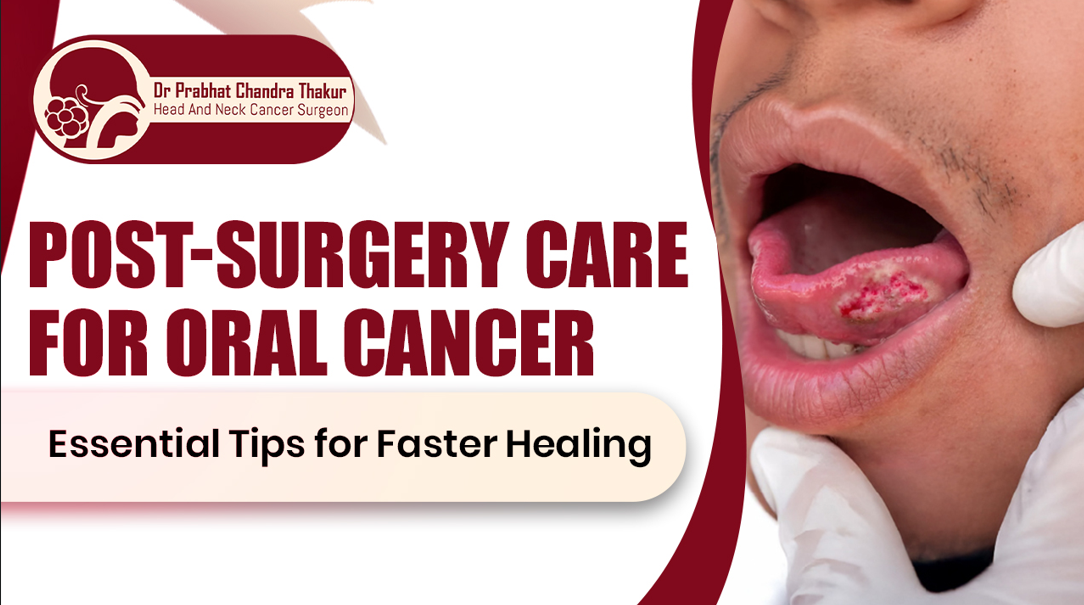
Recovering after oral cancer surgery takes time, planning, and the right guidance. A skilled thyroid surgeon in Kathmandu who also manages oral and head and neck cancers understands that healing does not end in the operating room. Patients often need support with pain control, wound care, nutrition, swallowing, speech, oral hygiene, and follow-up. On Dr. Prabhat Chandra Thakur’s website, this topic matters because he is an ENT surgeon and head and neck oncosurgeon at Nepal Cancer Hospital & Research Center with expertise in oral cancer, thyroid surgery, and complex head and neck surgery.
Oral cancer remains a major health issue worldwide. The World Health Organization reports that cancers of the lip and oral cavity caused an estimated 389,846 new cases and 188,438 deaths in 2022, showing why early treatment and strong postoperative care are so important.
Why is post-surgery care so important after oral cancer treatment?
Post-surgery care helps the body heal and lowers the risk of avoidable complications. After mouth or oropharyngeal cancer surgery, recovery can involve a hospital stay of several days or even weeks depending on the type of operation, reconstruction, breathing support, drains, and feeding needs. Good recovery planning helps patients manage pain, protect the wound, maintain nutrition, and return more safely to speaking and swallowing.
For many patients, the hardest part is not the surgery itself but the days and weeks after discharge. Eating may feel difficult. The mouth may be sore. Speech may sound different. Sleep may be disturbed. These changes can feel frightening, but they are common in oral cancer recovery and usually improve with structured support.
This is where an experienced thyroid doctor in Nepal, ENT doctor, or head and neck oncosurgeon adds value. Recovery advice must be individualized to the exact surgery performed, whether that includes tumour removal alone, neck dissection, flap reconstruction, tracheostomy, or feeding tube support.
What should patients expect in the first few days after oral cancer surgery?
The first stage of healing is usually focused on monitoring and stabilization.
Patients may wake up with:
- swelling in the mouth or neck
- drains near the surgical site
- stitches or reconstructed tissue
- a feeding tube
- difficulty speaking clearly
- discomfort while swallowing
- tiredness and dryness in the mouth
Cancer Research UK notes that postoperative recovery varies by surgery type and general health, and patients may need time in hospital before they are ready to continue healing at home.
In many cases, a multidisciplinary team is involved. Surgeons, nurses, dietitians, and speech and language therapists all play a role in recovery. NHS patient guidance for head and neck cancer surgery explains that patients often begin with liquids, then progress to puréed or easy-chew foods, and receive support from ward staff and dietitians as swallowing improves.
What helps oral cancer wounds heal faster?
Healing is never about one single trick. It usually improves when several basics are done well and consistently.
1. Follow wound care instructions exactly
Patients should keep the surgical site clean and avoid touching or irritating it unnecessarily. Dressings, drains, stitches, or reconstructed areas need careful observation. Redness, foul smell, increasing swelling, pus, fever, or worsening pain should be reported early because these may suggest infection or another complication.
2. Maintain good oral hygiene
The National Cancer Institute states that good oral hygiene can help prevent or reduce complications during and after cancer treatment. Keeping the mouth, gums, and teeth clean may reduce infections, sores, and other oral problems.
This usually means:
- gentle mouth cleaning as advised by the treating team
- regular rinsing if recommended
- using a soft brush when safe to do so
- avoiding harsh, alcohol-based products unless specifically prescribed
3. Control pain early
Pain makes it harder to eat, drink, sleep, and move the jaw. Good pain control is not just for comfort. It supports recovery because patients can participate better in swallowing practice, oral care, and nutrition.
4. Stay hydrated
Dry mouth and limited oral intake can slow recovery. Even when a patient is not eating normally, hydration still needs close attention.
5. Do not smoke or use smokeless tobacco
Tobacco delays wound healing and raises the risk of complications and recurrence. For oral cancer patients, avoiding tobacco is one of the most important long-term recovery steps.
What should patients eat after oral cancer surgery?
Nutrition is one of the most important parts of recovery. Surgery in the mouth can affect chewing, swallowing, taste, and appetite. Because of this, patients often need a staged diet plan rather than a quick return to normal food.
Memorial Sloan Kettering advises that during head and neck cancer treatment, patients with mouth soreness or painful swallowing often tolerate soft, bland foods better and may need to avoid very hot, acidic, spicy, or rough-textured foods.
Common diet progression after surgery
| Recovery phase | Typical food approach | Main goal |
| Early postoperative period | Tube feeding or liquids only | Protect healing site and maintain calories |
| Early oral intake | Thin or thick liquids, depending on swallowing safety | Reintroduce swallowing carefully |
| Intermediate phase | Puréed, mashed, soft moist foods | Improve intake with less irritation |
| Later phase | Easy-chew foods | Gradual return toward regular diet |
This progression varies by operation, reconstruction, aspiration risk, and speech-swallow evaluation.
Foods that are often easier during recovery
- soups that are not too hot
- porridge
- yogurt or curd
- mashed rice or soft khichdi
- soft eggs
- smoothies if approved
- blended lentils
- soft, moist vegetables
- protein-rich soft foods recommended by a dietitian
Foods often avoided early on
- spicy foods
- acidic fruits and juices
- dry toast or crackers
- very hot tea or coffee
- hard, crunchy foods
- tough meat
- alcohol
Poor nutrition is a real concern in head and neck cancer care. Reviews on nutritional management note that dysphagia and treatment-related eating difficulties can reduce food intake and worsen nutrition status, which is why early dietitian support matters.
Why are swallowing exercises and speech support so important?
Oral cancer surgery can affect tongue movement, jaw opening, saliva, sensation, and the coordination needed for safe swallowing. Some patients recover quickly. Others need guided rehabilitation.
Research continues to show that dysphagia is a common and important problem after oral cavity surgery, especially when treatment also includes radiotherapy or chemoradiotherapy.
A randomized controlled trial found that early postoperative oral exercise improved swallowing function in patients after oral cavity cancer surgery, supporting the role of structured rehabilitation instead of waiting passively for function to return.
Practical advice for patients
- do only the exercises prescribed by your care team
- do not rush back to normal eating without clearance
- report coughing, choking, or food sticking
- take small bites and small sips
- sit upright during and after meals
- be patient, because progress is often gradual
This is especially important for patients managed by a head and neck oncosurgeon or ENT doctor, where preserving both cancer control and function is a major goal.
How can patients reduce the risk of infection and mouth complications?
The mouth heals in a unique environment. It is warm, moist, full of bacteria, and constantly used for speaking and eating. That is why oral care has to be deliberate after surgery.
The National Cancer Institute recommends regular oral care because it may help prevent or reduce complications such as infections, mouth sores, and cavities during cancer treatment.
Tips that usually help
- follow the exact mouth-rinse plan advised by your surgeon
- keep lips moist if dryness is severe
- brush gently when permitted
- avoid picking at stitches or scabs
- keep dentures out unless your team says it is safe
- report bad breath, new ulcers, white patches, or bleeding
If radiotherapy is also planned after surgery, oral hygiene becomes even more important because oral tissues may become more sensitive and dry.
What symptoms should never be ignored after oral cancer surgery?
Some discomfort is expected. Some symptoms need immediate medical review.
Contact your surgical team early if you notice:
- worsening swelling
- bleeding that does not stop
- fever
- pus or foul-smelling discharge
- increasing redness or heat around the wound
- severe dehydration
- new trouble breathing
- repeated choking
- inability to swallow liquids
- sudden severe pain
Timely review can prevent a minor problem from becoming a major setback.
How long does recovery usually take?
Recovery timelines vary widely. Cancer Research UK notes that some patients stay in hospital only a few days, while others need a few weeks depending on the complexity of surgery and their general condition.
A simple tumour excision may recover faster than composite resection with flap reconstruction and neck dissection. Speech, mouth opening, swallowing, and energy levels often improve over weeks to months rather than days.
Typical recovery pattern
| Time after surgery | What many patients notice |
| First 1–2 weeks | swelling, soreness, low energy, modified diet |
| Weeks 2–6 | gradual wound healing, improving oral intake, follow-up visits |
| 1–3 months | clearer speech, stronger swallowing, better stamina |
| Beyond 3 months | longer-term rehabilitation, scar adaptation, surveillance |
This is a general guide, not a substitute for personal advice. Recovery is shaped by tumour size, surgery type, reconstruction, nutrition, smoking status, and whether more treatment is needed.
What role does follow-up care play?
Follow-up is essential after oral cancer surgery. It helps the surgeon assess wound healing, review pathology, remove drains or sutures when needed, plan rehabilitation, and discuss whether radiation or other treatment is required.
For patients searching for a thyroid surgeon in Kathmandu, it is worth understanding that surgeons like Dr. Prabhat Chandra Thakur often manage overlapping areas of thyroid, oral, and head and neck oncology. His website highlights expertise in oral cancer surgery, thyroid surgery, and head and neck cancer treatment, which is relevant for patients needing both surgery and long-term monitoring.
Good follow-up also helps detect:
- delayed wound healing
- speech or swallowing problems
- nutrition issues
- oral complications
- signs of recurrence
- late treatment side effects
Quick comparison: smooth recovery vs delayed recovery
| Factor | Smoother recovery | Delayed recovery risk |
| Nutrition | adequate calories and protein | poor intake, weight loss |
| Oral care | consistent and gentle | irregular hygiene, infection risk |
| Tobacco use | stopped completely | continued smoking or chewing |
| Pain control | managed early | pain limiting eating and movement |
| Follow-up | regular review | missed appointments |
| Rehabilitation | speech/swallow support | no guided therapy |
This kind of comparison helps answer user intent quickly and is useful for featured snippets and AI search summaries.
What are the most important home-care tips after discharge?
Keep instructions visible
Many families forget details after a hospital stay. Keep the medication chart, diet plan, and emergency contact numbers in one place.
Eat for healing, not convenience
Soft, high-protein, high-calorie foods often matter more than eating “normally” in the early phase. If weight loss is happening, report it early.
Rest, but do not stay completely inactive
Short walks and gentle movement can support circulation and reduce weakness, as long as the surgeon has not restricted activity.
Protect the mouth
Avoid sharp, dry, spicy, and very hot foods if they irritate healing tissues.
Do not miss review appointments
Even if the wound looks fine from outside, internal healing and function still need assessment.
Ask for help with swallowing, speech, or nutrition
These are common needs after oral cancer surgery. Needing support does not mean something went wrong.
Direct answers:
What is the best diet after oral cancer surgery?
The best diet is usually a staged plan starting with liquids or tube feeding if needed, then moving to puréed, soft, and easy-chew foods based on swallowing safety and surgeon advice.
How do you heal faster after oral cancer surgery?
Healing is supported by good oral hygiene, adequate nutrition, hydration, pain control, tobacco avoidance, rest, and regular follow-up.
Is swallowing difficulty normal after oral cancer surgery?
Yes. Swallowing problems are common after oral cavity surgery and may improve with time, diet adjustment, and speech-swallow rehabilitation.
When should I call my doctor after oral cancer surgery?
Call your doctor if you have fever, worsening swelling, bleeding, dehydration, repeated choking, foul discharge, or trouble breathing.
FAQ
1. How long does it take to recover from oral cancer surgery?
Recovery may take weeks to months depending on the type of surgery, general health, reconstruction, and additional treatment. Hospital stay can range from a few days to a few weeks.
2. What foods should be avoided after oral cancer surgery?
Patients often avoid spicy, acidic, rough, hard, or very hot foods early in recovery because they can irritate the mouth and make swallowing harder.
3. Can I speak normally after oral cancer surgery?
Speech may be temporarily affected, especially if the surgery involves the tongue, jaw, or floor of mouth. Improvement often happens gradually, and some patients benefit from speech therapy.
4. Why is oral hygiene important after surgery?
Oral hygiene may help reduce infections, sores, and other mouth complications during recovery.
5. Do all patients need a feeding tube after oral cancer surgery?
No. It depends on the surgery type, swallowing safety, and nutrition needs. Some patients need temporary tube feeding, while others can begin oral intake sooner.
6. Who should I consult for oral cancer surgery recovery in Nepal?
A qualified ENT surgeon or head and neck oncosurgeon with oral cancer experience should guide recovery. Dr. Prabhat Chandra Thakur’s site identifies him as an ENT and head and neck oncosurgeon with expertise in oral cancer and thyroid surgery at Nepal Cancer Hospital & Research Center.
Conclusion
Post-surgery care for oral cancer is not just about waiting for stitches to heal. It is about protecting the wound, reducing infection risk, maintaining nutrition, rebuilding swallowing and speech, and staying closely connected with the surgical team.
Patients looking for a thyroid surgeon in Kathmandu, thyroid doctor in Nepal, ENT doctor, or head and neck oncosurgeon often need a specialist who understands the full journey of head and neck cancer care. Dr. Prabhat Chandra Thakur’s background in oral cancer, thyroid, and head and neck surgery makes this topic highly relevant to his practice and to patients seeking recovery guidance in Nepal.
With clear instructions, regular follow-up, good nutrition, and early rehabilitation, many patients can recover more safely and comfortably after oral cancer surgery.
Dr. Prabhat Chandra Thakur is an ENT surgeon and head and neck oncosurgeon associated with Nepal Cancer Hospital & Research Center, Harisiddhi, Lalitpur. His website describes expertise in oral cancer surgery, thyroid surgery, head and neck cancer treatment, endoscopic skull base surgery, and reconstruction, along with postgraduate training at PGIMER Chandigarh and a Gold Medal Award for Best Outgoing Resident.