What is a Thyroid cancer?
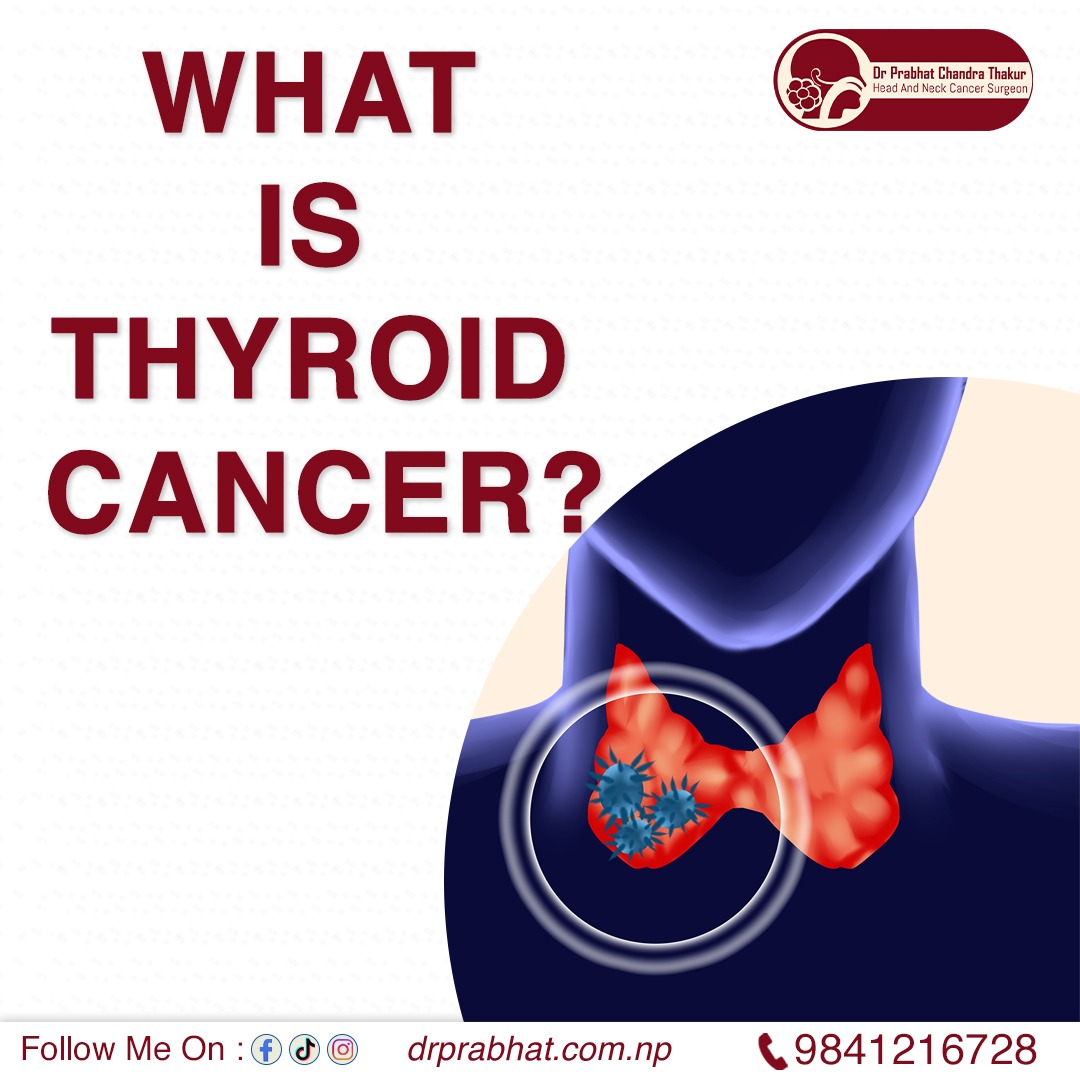
Thyroid cancer is a type of cancer that affects the thyroid gland and is still relatively uncommon but becoming more prevalent. With a five-year survival rate of more than 98% for papillary thyroid cancer and more than 80% for follicular thyroid cancer, the prognosis for thyroid cancer is usually favourable. However, medullary and anaplastic thyroid cancers have a worse prognosis and a reduced survival rate. Early detection and prompt therapy are essential for a successful course of treatment and a favourable prognosis. Anyone susceptible to developing thyroid cancer or who has a family history of the condition should undergo routine checkups and monitoring exams. Thyroid cancer is the growth of cells that originates in the thyroid. The thyroid is a small gland with a butterfly-like structure present at the base of the neck that produces hormones that regulate metabolism. Thyroid cancer: How common is it? With only 3% of all tumours being thyroid cancer, it is comparatively uncommon. But in recent years, its prevalence has grown. People in their 30s and older suffer from it the most frequently. It is two to three times more common in women than in men. What are the types of thyroid cancer? There are four main types: What are the risks factors of thyroid cancer? When the DNA of thyroid cells is altered, leading to the cells’ uncontrollable development and the growth of a lump, then risk factor is arise. Although the precise cause of thyroid cancer is unknown, several factors can elevate the risk such as: What signs and symptoms are present in thyroid cancer? Depending on the type and stage of cancer, symptoms can be change. There may be no symptoms at all in many cases, and cancer would only be noticed while a routine physical examination or imaging test. However, some typical signs and symptoms of this cancer are: How to diagnosis thyroid cancer? It is usually diagnosed through a combination of imaging tests, such as In addition, thyroid hormone levels may be further examined via blood tests to check for any irregularities. How to treat thyroid cancer? This cancer is treatment is depending on the type and stage of the disease, the patient’s age, and overall health. Treatments comprise: Surgery: Surgery is typically the primary treatment for cancer. Sometimes it may be necessary to remove the complete thyroid gland. Radiation therapy: Following surgery, radiation treatment can be used to shrink tumours that cannot be surgically removed or to eradicate any cancer cells that may still be present. Radioiodine therapy: Radioiodine shrinks and kills cancerous cells in addition to the diseased thyroid tissue. the thyroid gland absorbs the majority of the radioiodine, and the remaining of your body is only slightly exposed to radiation. Chemotherapy: rarely used to treat thyroid cancer. It is useful in the last stage. Introduction to Head and Neck Cancer – Dr. Prabhat Chandra Thakur Best Oral Cancer, Thyroid Cancer, Head and Neck Cancer Surgeon in Nepal Dr. Prabhat Chandra Thakur Designation: Consultant & Unit Chief/Program Director Head & Neck Oncology Qualification: MBBS, MS(ORL-HNS), Fellowship Head & Neck Oncology Department: Head and Neck Oncology Unit Special interest: Reconstructive surgery and Minimal Invasive surgery in Head & Neck Contact Now