
Oral Cancer Reconstructive Surgery Recovery: Does It Make Your Arm or Leg Weak?
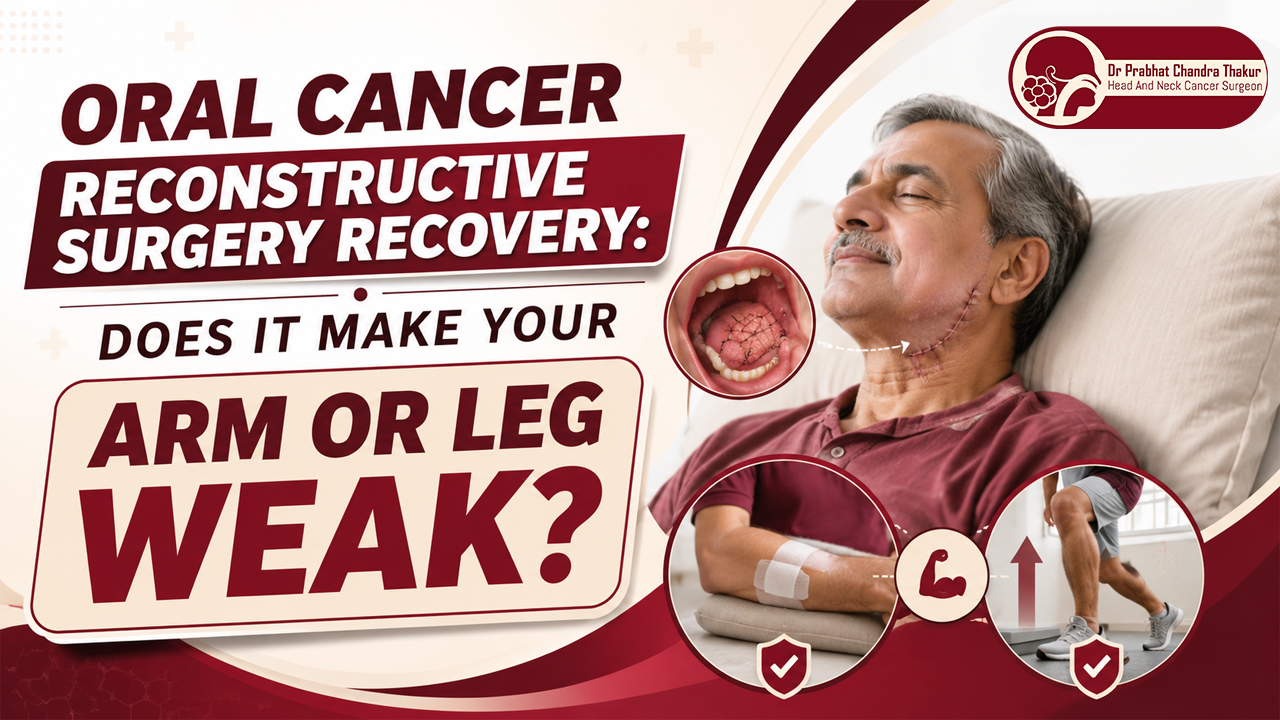
A common concern about oral cancer reconstructive surgery recovery is whether removing tissue from the arm or bone from the leg will leave that body part permanently weak. In most cases, reconstructive surgeons choose donor tissue or bone carefully so patients can retain useful arm function and gradually return to walking. However, temporary soreness, weakness, stiffness, numbness, and scarring are possible. Some patients experience longer-lasting changes, and serious complications can occur, although they are less common. The exact outcome depends on the type of reconstruction, the donor site, the patient’s overall health, and postoperative rehabilitation. Understanding what happens to the arm or leg can help patients and families make informed decisions without relying on unrealistic promises or unnecessary fear. What is oral cancer reconstructive surgery? Oral cancer reconstructive surgery repairs parts of the mouth, tongue, cheek, upper jaw, or lower jaw after cancerous tissue has been removed. Depending on the extent of surgery, reconstruction may involve transferring skin, soft tissue, muscle, bone, and blood vessels from another part of the body. The area where this material is taken is called the donor site. When surgeons completely transfer tissue along with its blood vessels and reconnect those vessels in the head or neck, the procedure is called a free flap reconstruction. The purpose is not simply to close a surgical wound. Reconstruction can help restore important functions such as: Memorial Sloan Kettering Cancer Center explains that reconstruction may be performed during the same operation as oral cancer removal, with tissue commonly taken from the forearm, thigh, or lower leg depending on the part of the mouth being repaired. Memorial Sloan Kettering: Mouth cancer surgery and reconstruction For additional background, read about head and neck cancer surgery and reconstruction. Why do surgeons use tissue or bone from the arm or leg? Surgeons use donor tissue because different parts of the mouth require different types of reconstruction. A tongue or cheek usually needs soft, flexible tissue that can help recreate the lining and shape of the mouth. A jaw, however, may require strong bone capable of restoring facial support and potentially accommodating future dental treatment. The forearm, thigh, and fibula are considered because they can provide suitable tissue with a dependable blood supply. Nevertheless, selecting a donor site always requires balancing two priorities: The best donor site is not automatically the same for every patient. A person’s circulation, occupation, existing mobility, medical history, and reconstructive needs all influence the decision. What types of donor tissue are used in oral cancer reconstruction? Reconstruction option Common use Potential donor-site effects Recovery consideration Radial forearm free flap Tongue, cheek, mouth lining, and other soft-tissue defects Arm scarring, temporary weakness, numbness, or altered sensation Hand and wrist function should be monitored during healing. Fibula free flap Lower or upper jaw reconstruction Leg soreness, temporary walking difficulty, ankle stiffness, or numbness Walking usually resumes gradually with clinical guidance. Anterolateral thigh flap Larger soft-tissue defects involving the tongue, cheek, or throat Thigh soreness, scarring, or temporary weakness Mobility depends on how much tissue is removed and the individual recovery plan. Other bone-containing flaps Selected jaw or facial reconstruction cases Effects depend on whether tissue comes from the shoulder, hip, or another site. Alternative options should be discussed when a particular donor site is unsuitable. The practical difference is that a forearm flap generally addresses soft-tissue reconstruction, while a fibula flap is commonly considered when the jaw requires bone replacement. The website’s existing discussion of jaw and maxillary reconstruction options provides additional context on when different reconstructive approaches may be appropriate. Will taking tissue from the arm make the hand weak? A radial forearm flap does not usually mean the hand will stop functioning. However, the donor arm can feel weaker after surgery, particularly while the wound, skin graft, and surrounding tissues are healing. The procedure typically involves taking skin, soft tissue, and blood vessels from the inner forearm. The resulting donor-site wound may require a skin graft, and the arm may initially be protected with a dressing, splint, or cast. Cambridge University Hospitals notes that patients can experience reduced hand strength, altered sensation around the thumb, and increased sensitivity to cold. Numbness may improve over time, but it can occasionally persist. Cambridge University Hospitals: Radial forearm free flap What symptoms can occur in the arm? After forearm flap surgery, patients may notice: These effects do not necessarily mean the arm has been permanently damaged. Some limitations reflect normal healing, temporary protection of the wound, or reduced activity after a major operation. However, recovery may be more important for someone whose work depends on fine hand movements or strong grip, such as a tailor, musician, driver, craftsperson, mechanic, or manual worker. Patients should tell their surgeon which hand they rely on most and describe any existing hand problems before surgery. Does arm weakness always disappear completely? No. Many people regain useful hand function, but complete recovery cannot be guaranteed. The final outcome depends on the size of the flap, whether nerves are affected, wound healing, rehabilitation, and individual differences. Persistent numbness, reduced grip strength, or discomfort can occur in some patients. A realistic explanation is that forearm reconstruction is designed to preserve practical arm and hand function, while acknowledging that the donor site may not feel exactly as it did before surgery. Will removing the fibula bone make the leg permanently weak? Removing part of the fibula does not automatically prevent a person from walking. The fibula is the smaller bone on the outer side of the lower leg, while the tibia carries much of the body’s weight. In a fibula free flap, surgeons remove a selected segment of fibula together with its blood vessels and, when necessary, surrounding soft tissue. That bone is then shaped and used to reconstruct the upper or lower jaw. Cambridge University Hospitals explains that much of the fibula can be removed without preventing walking or weight bearing, and that significant long-term walking problems are often avoided. However, individual recovery varies. Cambridge University Hospitals: … Read more