Thyroid disorders are among the most common endocrine conditions worldwide, yet they are often misunderstood or underestimated by patients. Many people live with thyroid nodules, goiters, or hormonal imbalances for years without realizing when medical management is sufficient and when surgical intervention becomes necessary.
A common question patients ask is: “When is thyroid surgery actually required?”
The answer is rarely simple. Thyroid surgery is not recommended for every thyroid condition, and unnecessary surgery can expose patients to avoidable risks. At the same time, delaying surgery when it is clearly indicated can lead to serious complications, including airway obstruction, nerve damage, or progression of thyroid cancer.
This article explains when thyroid surgery is recommended, which conditions require surgical evaluation, how decisions are made, and why consulting an experienced thyroid doctor in Nepal and thyroid surgeon in Nepal is critical for safe outcomes.
Understanding the Thyroid Gland and Its Function
The thyroid is a butterfly shaped gland located at the front of the neck, just below the voice box. It plays a crucial role in regulating metabolism, energy levels, heart rate, body temperature, and overall hormonal balance.
Thyroid disorders can broadly be divided into:
- Structural problems (nodules, goiter, tumors)
- Functional problems (overactive or underactive thyroid)
- Inflammatory conditions
- Malignancy (thyroid cancer)
Not all thyroid problems require surgery, but some do and recognizing the difference is essential.
What Is Thyroid Surgery?
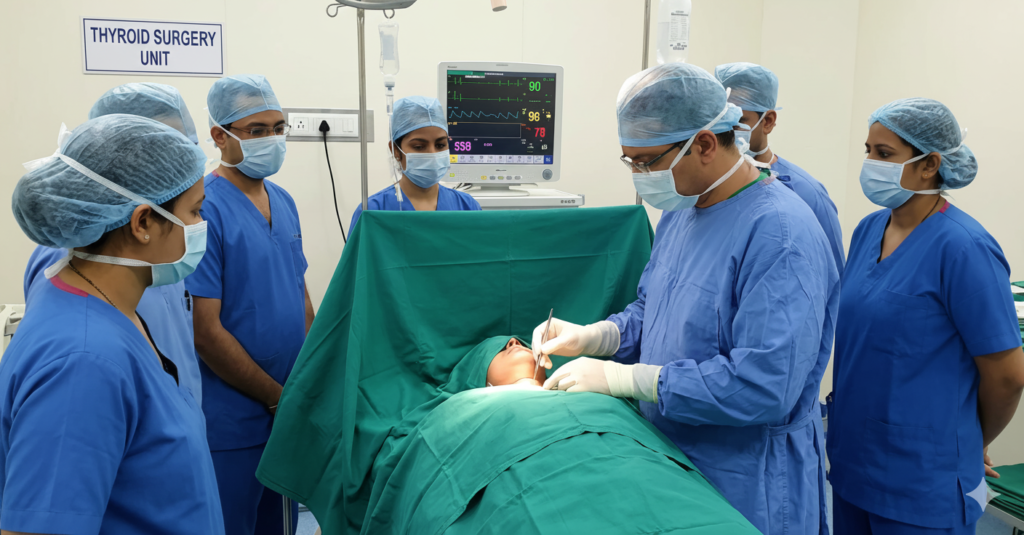
Thyroid surgery involves partial or complete removal of the thyroid gland, depending on the underlying condition. The main types of thyroid surgery include:
- Hemithyroidectomy – removal of one lobe
- Subtotal thyroidectomy – partial removal
- Total thyroidectomy – complete removal
The choice of procedure depends on diagnosis, extent of disease, risk factors, and patient specific considerations.
A skilled thyroid surgeon in Nepal focuses not only on disease removal but also on preserving voice quality, calcium balance, and long-term quality of life.
When Is Thyroid Surgery Recommended?
Thyroid surgery is recommended only when the benefits clearly outweigh the risks. Below are the most common clinical indications.
1. Thyroid Cancer or Suspicion of Cancer
One of the strongest indications for thyroid surgery is confirmed or suspected malignancy.
Surgery is recommended when:
- Fine needle aspiration biopsy suggests cancer
- Imaging shows features suspicious for malignancy
- There is rapid growth of a thyroid nodule
- There are associated lymph node enlargements
- There is family history of thyroid cancer
In such cases, early surgical intervention significantly improves prognosis. This is why evaluation by an experienced thyroid doctor in Nepal is critical when cancer is suspected.
2. Thyroid Nodules With Suspicious Features
Thyroid nodules are common, and most are benign. However, surgery may be recommended if:
- The nodule is growing despite observation
- Biopsy results are indeterminate or suspicious
- The nodule causes pressure symptoms
- There are cosmetic concerns with large nodules
Decision-making in these cases requires clinical judgment, experience, and careful risk assessment.
3. Large Goiter Causing Pressure Symptoms
A goiter refers to an enlarged thyroid gland. Surgery may be necessary when a goiter causes:
- Difficulty swallowing
- Breathing problems
- Voice changes
- Compression of nearby structures
Large or long-standing goiters may extend behind the breastbone (retrosternal goiter), making surgery technically challenging. Such cases should be handled by a highly experienced thyroid surgeon in Nepal.
4. Hyperthyroidism Not Controlled by Medication
Hyperthyroidism (overactive thyroid) is often managed medically. However, surgery is recommended when:
- Medications fail to control hormone levels
- Side effects from medication are significant
- There is a large toxic goiter
- There are suspicious nodules
- The patient prefers definitive treatment
Surgery provides a permanent solution in selected cases of hyperthyroidism.
5. Recurrent Thyroid Cysts or Nodules
Repeated aspiration of cystic nodules may provide temporary relief, but surgery is considered when:
- Cysts recur frequently
- Symptoms persist
- There is uncertainty about diagnosis
6. Cosmetic and Quality-of-Life Concerns (Selected Cases)
In some patients, large visible thyroid swellings affect confidence, posture, and comfort. Surgery may be considered when:
- Medical observation is no longer effective
- The patient understands risks and benefits
- The procedure is performed by an experienced surgeon
Why Experience Matters in Thyroid Surgery
Thyroid surgery is delicate. The thyroid gland lies close to:
- Vocal cord nerves
- Parathyroid glands (calcium regulation)
- Major blood vessels
Complications such as voice changes or calcium imbalance are rare in expert hands but increase with inexperience.
This is why choosing a thyroid surgeon in Nepal with extensive experience is one of the most important decisions a patient can make.
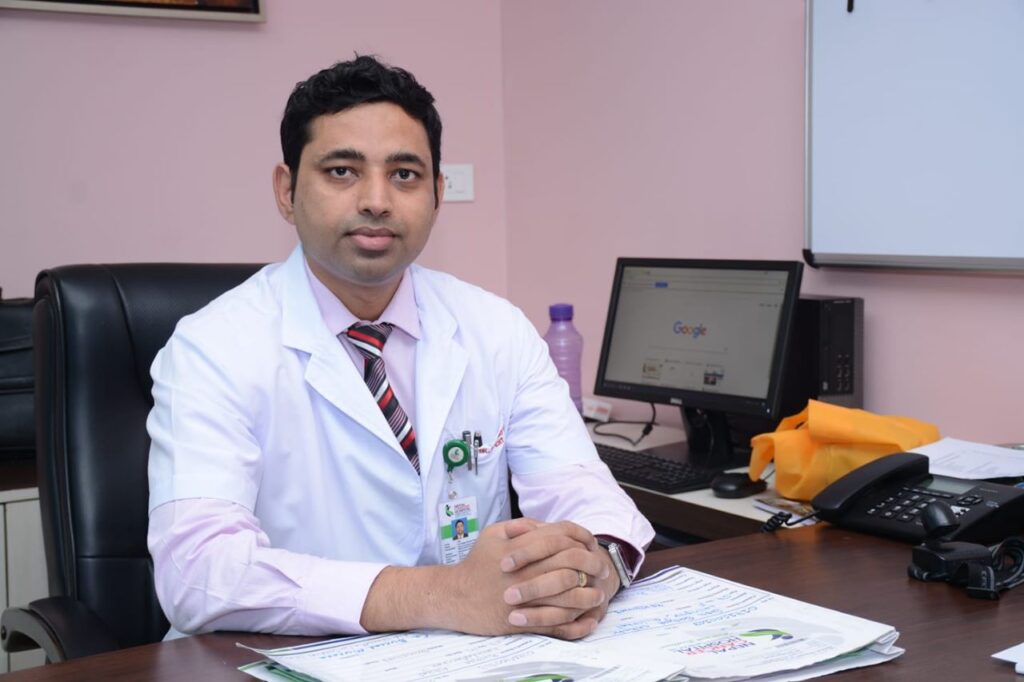
About the Specialist: Dr. Prabhat Chandra Thakur
Dr. Prabhat Chandra Thakur
Consultant Head & Neck and Thyroid Surgeon
With more than 15 years of clinical and surgical experience, Dr. Prabhat Chandra Thakur is recognized for his expertise in:
- Thyroid surgery
- Head and neck oncology
- Complex neck dissections
- Reconstruction following cancer surgery
His approach emphasizes:
- Accurate diagnosis
- Evidence-based surgical decision making
- Preservation of voice and nerve function
- Patient education and long-term follow-up
As a trusted thyroid doctor in Nepal, Dr. Thakur combines surgical precision with compassionate patient care.
How Is the Decision for Thyroid Surgery Made?
The decision for surgery is never based on a single test. It involves:
- Clinical examination
- Ultrasound imaging
- Biopsy results
- Hormonal evaluation
- Patient symptoms and preferences
An experienced thyroid surgeon integrates all these factors before recommending surgery.
Thyroid surgery should be recommended only after careful evaluation of symptoms, imaging, biopsy results, and patient-specific risk factors.
What to Expect Before Thyroid Surgery
Pre-operative evaluation includes:
- Blood tests
- Imaging studies
- Vocal cord assessment (in selected cases)
- Detailed discussion of risks and benefits
Patient education before surgery plays a crucial role in recovery and satisfaction.
Recovery After Thyroid Surgery
Most patients recover well after thyroid surgery when performed by an experienced surgeon.
Typical recovery includes:
- Short hospital stay
- Mild neck discomfort
- Gradual return to normal activities
- Thyroid hormone replacement if required
Long-term outcomes are excellent when surgery is appropriately indicated.
Risks of Delaying Needed Thyroid Surgery
Delaying surgery when clearly indicated may lead to:
- Progression of cancer
- Airway compromise
- Nerve involvement
- More complex surgery later
This is why timely consultation with a thyroid doctor in Nepal is essential.
Frequently Asked Questions (FAQs)
Is thyroid surgery always necessary for nodules?
No. Most nodules are benign and monitored unless they cause symptoms or show suspicious features.
Is thyroid surgery safe?
Yes, when performed by an experienced thyroid surgeon.
Will I need lifelong medication after surgery?
Some patients require thyroid hormone replacement, depending on the extent of surgery.
How do I choose a thyroid surgeon in Nepal?
Look for experience, case volume, and expertise in head and neck surgery.
When should I consult a thyroid doctor?
Any persistent neck swelling, voice change, or abnormal thyroid test should be evaluated.
Conclusion
Thyroid surgery is a highly effective and safe treatment when appropriately recommended. The key lies in accurate diagnosis, proper timing, and surgical expertise. Not every thyroid condition requires surgery, but when it does, delaying treatment can lead to avoidable complications.
Consulting an experienced thyroid doctor in Nepal and thyroid surgeon in Nepal, such as Dr. Prabhat Chandra Thakur, ensures that decisions are made carefully, surgery is performed safely, and long-term outcomes are optimized.
Author & Medical Review Note
This article is written for educational purposes and reflects established clinical guidelines and surgical practices in thyroid and head & neck surgery. It does not replace individualized medical consultation.