
Thyroid Surgery and Nerve Damage: Voice Changes, Risks and the Role of Nerve Monitoring
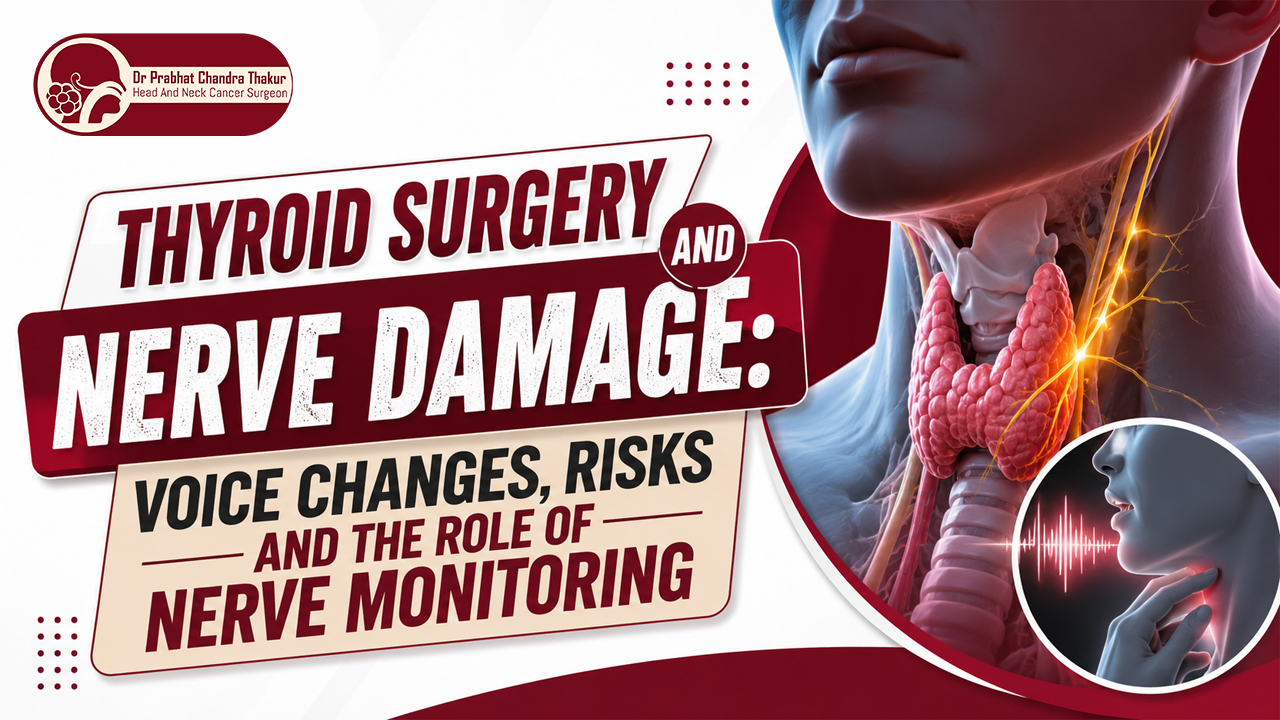
A common fear before thyroid surgery is: “Could the operation damage a nerve, change my voice, affect my tongue, or make my face look crooked?” In routine thyroid surgery, the nerves of greatest concern are not the main nerves controlling the tongue or facial movement. The key nerves lying close to the thyroid are the laryngeal nerves that help control the vocal cords and voice. Voice changes can occur after thyroid surgery, but a changed voice does not automatically mean that a nerve has been permanently damaged. Temporary irritation, swelling, the breathing tube used during anesthesia and changes in neck tissues can also affect how the voice feels or sounds during recovery. Modern intraoperative nerve monitoring can give the surgical team additional real-time information about laryngeal nerve function during an operation. However, it is a safety aid rather than a guarantee that nerve injury cannot occur. For a broader overview of procedures and indications, see thyroid surgery in Nepal. Which Nerves Are Important During Thyroid Surgery? The thyroid gland sits in the lower front of the neck, close to the voice box. Two sets of laryngeal nerves are particularly important during thyroid surgery because of their relationship to voice production. Recurrent laryngeal nerve The recurrent laryngeal nerve (RLN) supplies most of the muscles responsible for opening and closing the vocal cords. Healthy RLN function contributes to speaking, breathing, coughing and protecting the airway while swallowing. During thyroid surgery, the surgeon normally identifies and carefully preserves this nerve while separating the thyroid gland from surrounding structures. Professional guidance from the American Academy of Otolaryngology Head and Neck Surgery recommends identifying the recurrent laryngeal nerve during thyroid surgery. If one recurrent laryngeal nerve becomes weak or injured, a patient may develop hoarseness, a breathy or weak voice, vocal fatigue or difficulty protecting the airway when drinking thin liquids. Injury affecting both nerves is considerably more serious because movement of both vocal cords may be affected and breathing can become difficult. External branch of the superior laryngeal nerve Another important structure is the external branch of the superior laryngeal nerve. It helps control the cricothyroid muscle, which adjusts vocal-cord tension and is especially important for pitch. An injury here may be less obvious than an RLN injury. A person may still speak relatively normally but notice difficulty producing higher pitches, projecting the voice or singing. This can be particularly important for singers, teachers, broadcasters and other professional voice users. AAO-HNS clinical guidance therefore recommends that surgeons take steps to preserve this nerve as well as the recurrent laryngeal nerve. Can Thyroid Surgery Cut the Tongue Nerve or Make the Face Crooked? This is a common source of anxiety, but it mixes together different groups of nerves. Routine thyroid surgery takes place in the lower neck around the thyroid gland. Professional thyroid-surgery guidance focuses particularly on the recurrent and superior laryngeal nerves because these are the nerves directly related to voice that lie within the surgical field. The nerves responsible for most facial movement and the principal nerves responsible for tongue movement are anatomically different from these laryngeal nerves. Therefore, a crooked face or loss of tongue movement is not a typical expected consequence of standard thyroidectomy. What patients are more commonly counselled about are possible changes involving voice, vocal-cord movement, swallowing, calcium levels and, depending on the operation, thyroid-hormone replacement. Dr. Prabhat Chandra Thakur’s existing thyroid surgery guide similarly identifies recurrent laryngeal nerve preservation and parathyroid preservation as major surgical considerations. The situation may be different when a cancer is very extensive and directly involves adjacent structures or when surgery is unusually complex. Risk must therefore be assessed for the individual patient rather than inferred from a general social-media statement. Does Hoarseness After Thyroid Surgery Always Mean Nerve Damage? No. A temporary voice change after thyroid surgery does not automatically mean that the recurrent laryngeal nerve has been permanently damaged. The American Thyroid Association notes that temporary hoarseness can occur after thyroid surgery. The recurrent laryngeal nerve may be irritated during an operation even when it has not been permanently injured. Other contributors may include the endotracheal breathing tube used during general anesthesia, temporary swelling and inflammation around the surgical area, changes in neck-muscle tension and postoperative tissue healing. Dr. Thakur’s existing guidance on recovery after thyroid surgery also notes that sore throat and hoarseness may occur after surgery because of intubation or temporary nerve irritation. His website’s article on speech therapy after thyroid surgery further distinguishes nerve paralysis from postoperative voice problems that may occur even when a laryngeal nerve has been preserved. That distinction matters because a patient hearing a different voice immediately after an operation may understandably fear permanent damage when the cause may be temporary. What Can Recurrent Laryngeal Nerve Injury Feel Like? Symptoms depend on which nerve is affected and the degree of dysfunction. Possible symptoms associated with recurrent laryngeal nerve dysfunction include: The recurrent laryngeal nerve controls muscles involved not only in voice production but also in opening and closing the vocal cords for breathing and airway protection. The superior laryngeal nerve produces a somewhat different pattern. A person may primarily notice reduced pitch range, difficulty reaching high notes or difficulty producing a strong projected voice. Importantly, symptoms alone cannot determine whether the nerve is functioning normally. Professional guidance recommends assessment of vocal-fold mobility when a patient develops a voice change following thyroid surgery. How Common Is Voice Change After Thyroid Surgery? Temporary voice symptoms are more common than permanent nerve dysfunction. The American Thyroid Association’s patient information cites an estimated 5–7% risk of temporary hoarseness associated with irritation of the recurrent laryngeal nerve, with most such temporary changes improving as the nerve recovers. An AAO-HNS clinical guideline developed specifically to improve voice outcomes after thyroid surgery noted that temporary laryngeal nerve problems occur more often than long-lasting voice problems. Exact complication rates should not be used as a personal prediction. They vary according to the reason for surgery, extent of surgery, anatomy, whether lymph nodes … Read more