
HPV and Oropharyngeal Cancer: What Both Men and Women Need to Know
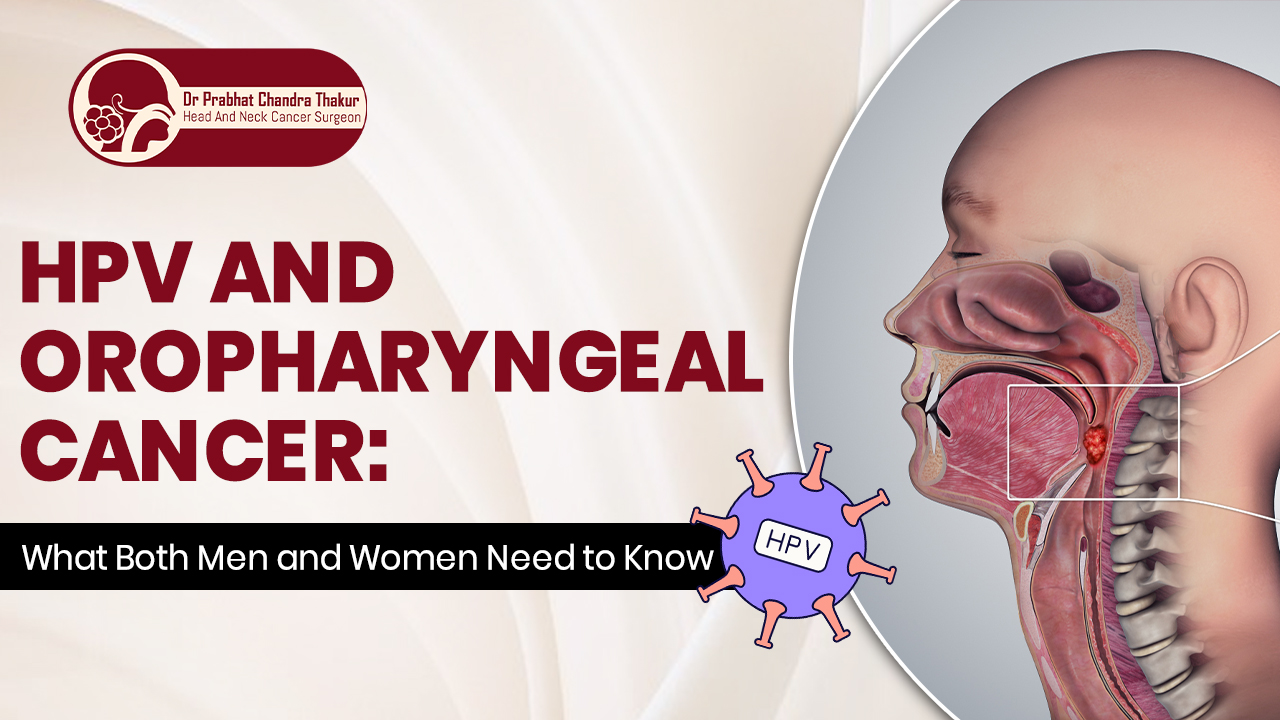
HPV and oropharyngeal cancer refers to throat cancer that develops in the oropharynx, most commonly the tonsils and base of tongue, after long-term infection with high-risk human papillomavirus, especially HPV16. It affects both men and women, often develops silently over years, and is now a major cause of oropharyngeal cancer in many settings. Most people still associate HPV mainly with cervical cancer. That is no longer enough. HPV can also infect the mouth and throat, and it is now linked to a large share of oropharyngeal cancers, especially cancers involving the tonsils and base of tongue. In practical terms, this means a virus often discussed as a women’s health issue is also highly relevant to men, families, and clinicians who manage head-and-neck disease. This guide explains the risk, warning signs, diagnosis, prevention, and what specialist evaluation should look like. Why HPV and Oropharyngeal Cancer deserves more attention The old public-health framing around HPV was too narrow. It helped raise awareness of cervical cancer, but it also left many people unaware that HPV is strongly associated with cancers of the oropharynx. The CDC states that HPV is thought to cause 60% to 70% of oropharyngeal cancers in the United States. The American Cancer Society similarly notes that HPV DNA is found in about 2 out of 3 oropharyngeal cancers, particularly in the tonsil and base of tongue. That matters for three reasons: Extractable summary: HPV related oropharyngeal cancer is not rare enough to ignore, not female only, and not always obvious early. Its risk profile and prevention model are different from what many people assume. What is oropharyngeal cancer? The oropharynx is the middle part of the throat behind the mouth. It includes: When cancer develops there, it is called oropharyngeal cancer. In HPV-related disease, the cancer is usually a squamous cell carcinoma driven by persistent high-risk HPV infection, most often HPV16. Direct answer HPV does not “cause cancer overnight.” Infection typically occurs years earlier, then in a smaller subset of people persistent viral activity drives cell changes that can eventually lead to cancer in the tonsils or base of tongue. A useful distinction: oral cavity vs oropharynx Area Examples HPV link Oral cavity Front tongue, gums, cheek lining, hard palate Usually less strongly linked Oropharynx Tonsils, base of tongue, back of throat Much more strongly linked, especially HPV16 This distinction matters because many people say “mouth cancer” when the more precise term is “oropharyngeal cancer,” and that precision affects diagnosis, counseling, and search visibility. How HPV leads to throat cancer High-risk HPV infects mucosal tissue. In some persistent infections, viral proteins such as E6 and E7 disrupt the normal controls that tell cells when to stop dividing. Over time, that can promote malignant transformation. Review literature describes these viral oncogenes as key drivers in HPV-positive oropharyngeal squamous cell carcinoma. Original insight One reason HPV-related throat cancer is often missed early is anatomical concealment. Tumors can begin deep in tonsillar crypts or at the base of tongue, where a patient cannot see them and where symptoms may be subtle until lymph nodes in the neck enlarge. That is why a “simple neck lump” should never be casually dismissed when it persists. This is not just a medical nuance; it is the core communication gap that awareness campaigns often miss. “HPV-related oropharyngeal cancer is dangerous not because it is always aggressive at the start, but because it can grow quietly in hard-to-see anatomy until the first obvious sign appears in the neck.” Does HPV-related oropharyngeal cancer affect men and women equally? It affects both, but awareness in men remains especially important. Major reviews note that HPV-positive oropharyngeal cancer has risen substantially in many higher-income countries and has a marked male predominance in reported cases. Why men often underestimate the risk Many men do not connect HPV with their own cancer risk because public discussion has historically centered on cervical disease. That creates an awareness lag. By the time a throat symptom is evaluated, disease may already be advanced locally or present first as a neck node. Risk factors that matter HPV is central, but it is not the only context clinicians assess. Smoking and alcohol remain important risk factors for oral cavity and oropharyngeal cancers overall, even though HPV-related disease behaves differently from classic tobacco-associated disease. Extractable summary: Men and women can both develop HPV-related oropharyngeal cancer. Men should not treat HPV as someone else’s issue, and women should not assume HPV-related cancer risk ends with the cervix. Symptoms that should never be ignored The challenge is not just severity. It is persistence. Common warning signs Some patients have few or even no obvious early symptoms. That is one reason early clinical evaluation matters. When to seek evaluation urgently See a clinician promptly if symptoms last more than two to three weeks, or sooner if there is a neck lump, worsening swallowing difficulty, bleeding, or significant weight loss. A common mistake is treating persistent throat symptoms repeatedly as infection without asking whether cancer needs to be excluded. How doctors diagnose HPV-related oropharyngeal cancer Diagnosis is not based on symptoms alone. It usually requires a structured workup. Typical diagnostic pathway Why p16 matters HPV-positive and p16-positive cancers often have a better prognosis than HPV-negative disease, but the details are more nuanced than patients are sometimes told. Recent evidence suggests that testing both HPV and p16 may better stratify risk than p16 alone in some cases. Quotable expert-style line:“In modern head-and-neck oncology, the question is not only ‘Is this throat cancer?’ but also ‘What is its HPV and p16 profile?’ because biology increasingly shapes prognosis and treatment planning.” Treatment: what patients should expect Treatment depends on tumor site, stage, nodal disease, pathology, overall fitness, and specialist judgment. Common modalities include: NCI treatment guidance and major reviews describe management as stage-dependent and multidisciplinary, often balancing disease control with preservation of swallowing, speech, and quality of life. Broad comparison Treatment approach Where it may fit Main consideration Surgery Selected resectable disease Pathology-driven staging and functional … Read more